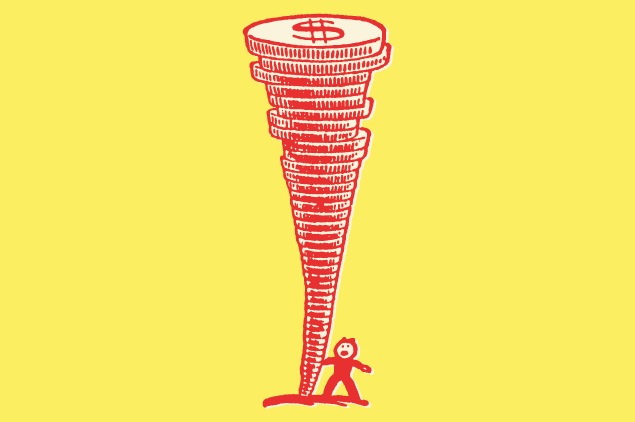
It’s true what they say: too much of a good thing can be bad. No where is this truer than with
student loans.
Education loans enable students to bridge the gap between the
cost of college and what they can afford to pay after scholarships and financial aid have been applied. In this, they are necessary to helping students achieve their goals and can be viewed as a good thing.
Student Loans for College: How Much Student Loan Debt is Too Much?
At the same time, it can be difficult for students to make loan decisions that will impact them for years to come. The sum they are considering today can have a great bearing on what they do in the future, like when they buy a house, get married, or decide to start a family of their own.
However, the reality of the future is difficult to visualize today, especially for 18-year-old students. It’s imperative that students get a glimpse of what life with student loans will look like before they borrow, though, in order to make smarter borrowing choices.
What You Need to Know About Student Loans
There are two types of student loans: federal and private. Federal loans are oftentimes included in a financial aid package. They come with the lowest interest rates. There are student loans specifically for students that show exceptional financial need, and then there are
federal student loans for anyone.
Private student loans are also an option. Though they have higher interest rates, the amount that you can borrow each year to pay for college is not capped like federal loans.
Should I Take Out a Student Loan?
To combat overborrowing to pay for college, students should exhaust all of their financial options first. This means
searching for scholarships, applying for financial aid, and looking for a part-time job. If students still require money to pay for college, it’s time to look at student loans.
Don’t wait until your
financial aid award letter arrives to consider borrowing money to pay for college. As you begin searching for a college during your junior year of high school (or sooner, in some cases), you should also give thought to how you will pay for college. At this time, you and your parents should have some honest discussions about who is paying for college and what you can realistically afford.
Next, use a
net cost calculator to figure out the true cost of college. You can find these on admission and financial aid websites for each college you’re interested in attending. Net price calculators take into account the basics of your academic performance and family financial circumstances. The school then uses that information to provide a picture of what paying for school will look like for you each year. It includes:
- Expected Family Contribution (EFC)
- Merit scholarships from the school based on academic performance
- Financial aid, such as grants
- Loans
Again, the amount you see will be a rough estimate; however, you can use it as a guide for what to expect to pay.
Take special note of how much the net price calculators say you’ll have to borrow in order to attend the college. If you multiply that figure by four, is the number more than the average starting salary for a recent college graduate? If so, you may want to consider a school that will cost less.
When it comes to
borrowing money to pay for college, it’s a good rule of thumb to always borrow federal first. Federal student loans have the lowest interest rates, meaning they will accrue less interest over time and cost less to pay back.
If you max out the federal loan amount that you qualify for, ask your financial aid officer for a preferred lender list. This list is put together by the college and includes private lenders that they feel comfortable working with as you finance your education. Typically, these are private lenders that other students at the school have used in the past.
How Much Student Debt is Reasonable?
It can be difficult and overwhelming to determine just how much to borrow for college, but it is possible with a little research. A good rule of thumb is to never borrow more than your expected starting annual salary.
Most importantly, students must view each dollar they borrow for college as a dollar that they will be unable to spend to buy such essentials as a car, a house, or to start a family, and a dollar that they cannot put into a retirement-savings account.
How Much Will You Owe in Student Loans After College?
The amount you owe after college is entirely up to you. For some students, it becomes tempting to utilize student loans to pay for more than the college essentials. They use student loan dollars to pay for spring break trips, summer expenses if they’re interning away from home, and more.
After you have graduated, there will be a six-month grace period in which you do not have to begin
repayment of your student loans. If you do have a job, and are able to make payments, it’s wise to start making payments as soon as possible. Making payments sooner, if you’re able, will help you pay off the loan sooner.
How Can You Reduce Your Student Debt?
Many families cringe at the thought of taking out loans to pay for college. While it’s necessary in many cases, there are things you can do to minimize the amount you have to take out. It requires you to get creative with how you’re paying for college and pull from multiple sources.
Other College Tuition Funding Sources
Many students make the mistake of limiting their scholarship search to the junior and senior years of high school when there are thousands of college scholarship opportunities. Be sure that your
Fastweb profile is updated and you’re checking your matches frequently. Commit to applying to multiple scholarships each month.
Part-time jobs and internships are also a great way to pay for college. Paychecks can be used to cover college costs, like textbooks, tech needs, or late night food delivery. Some employers also offer
tuition assistance to part-time employees, which can help cover tuition.
Choose an Affordable College
In order to limit your student loan borrowing, you may need to compromise on where you attend college. Private colleges are more expensive than public universities or local community colleges. Get creative with where you’re attending college. It may be in your best interest to attend a
community college for the first two years and then transfer to a four-year university.
Negotiate Financial Aid Offers
Did you know that you can actually
negotiate your financial aid package? If you feel that you deserve more financial aid, or if your financial circumstances weren’t adequately portrayed on the
FAFSA, you can speak with a financial aid officer at your school about changes to your package.
Calculate Loan Payments BEFORE You Borrow
After students come up with a number for the amount they expect to borrow, they should make sure the loan amount, plus other expected debts such as rent and car payments, do not exceed 33% of their expected future income. You can calculate your average student loan payment per month using
FinAid Calculators.
Before you borrow, carefully consider taking out $60,000 worth of
student loan debt when you may only have a $30-, $40-, or $50,000 salary upon graduating.
Explore Career Options and Starting Salary
It may be hard to determine your future career as a senior in high school, especially when you may not even know your college major! In that case, use the average starting salary for college graduates as a base, which is $55,260, according to
USA Today.
If you do know your college major and intended career path after graduation, check out the average starting salary with
Monster’s Salary Tool. Once you find that starting salary, you’ll have an idea of how much you should borrow over the course of four years.
Make Smart Student Loan Borrowing Choices
Borrowing money to pay for college is not a bad thing. In fact, it’s how most students
pay for college. However, borrowing can go bad if you take too much. You will spend decades of your life repaying that burden, which can sometimes create a domino effect in how you save and spend for a lifetime.
Graduates with too much student loan debt have been known to put off marriage, buying a home and retiring because of the amount they have to pay back. There are also many individuals out there who begin payments toward their children’s higher education while still paying for their own student loans.
If you have to borrow, do it smartly. Your future self will thank you.